
Photography Insights and Methods: Essential Tips for Capturing Stunning Images
Recent Post



Ready to boost your reach and build a powerful brand online?
Phone
+92-302-5643101
info@hazaradigitals.com
Introduction
Photography is both an art and a science, capturing moments and emotions that communicate powerful narratives. Whether you’re starting out or have years of experience, understanding both the fundamentals and advanced techniques is key to improving your craft. This blog explores vital photography insights and methods to help enhance your skills, covering everything from camera configurations to composition and lighting.
Grasping Camera Configurations
At the heart of photography lies the manipulation of light. Mastering your camera’s settings is essential for controlling your photos. Here are the core settings you need to understand:
The Exposure Triangle
Aperture (f-stop): Controls how much light enters the lens and affects the depth of field (focus).
Shutter Speed: Controls how long the camera’s sensor is exposed to light, impacting motion.
ISO: Determines the sensitivity of your sensor to light. A higher ISO is helpful in low-light conditions but may introduce noise.
Properly balancing these three elements is crucial for getting the correct exposure in your Images.
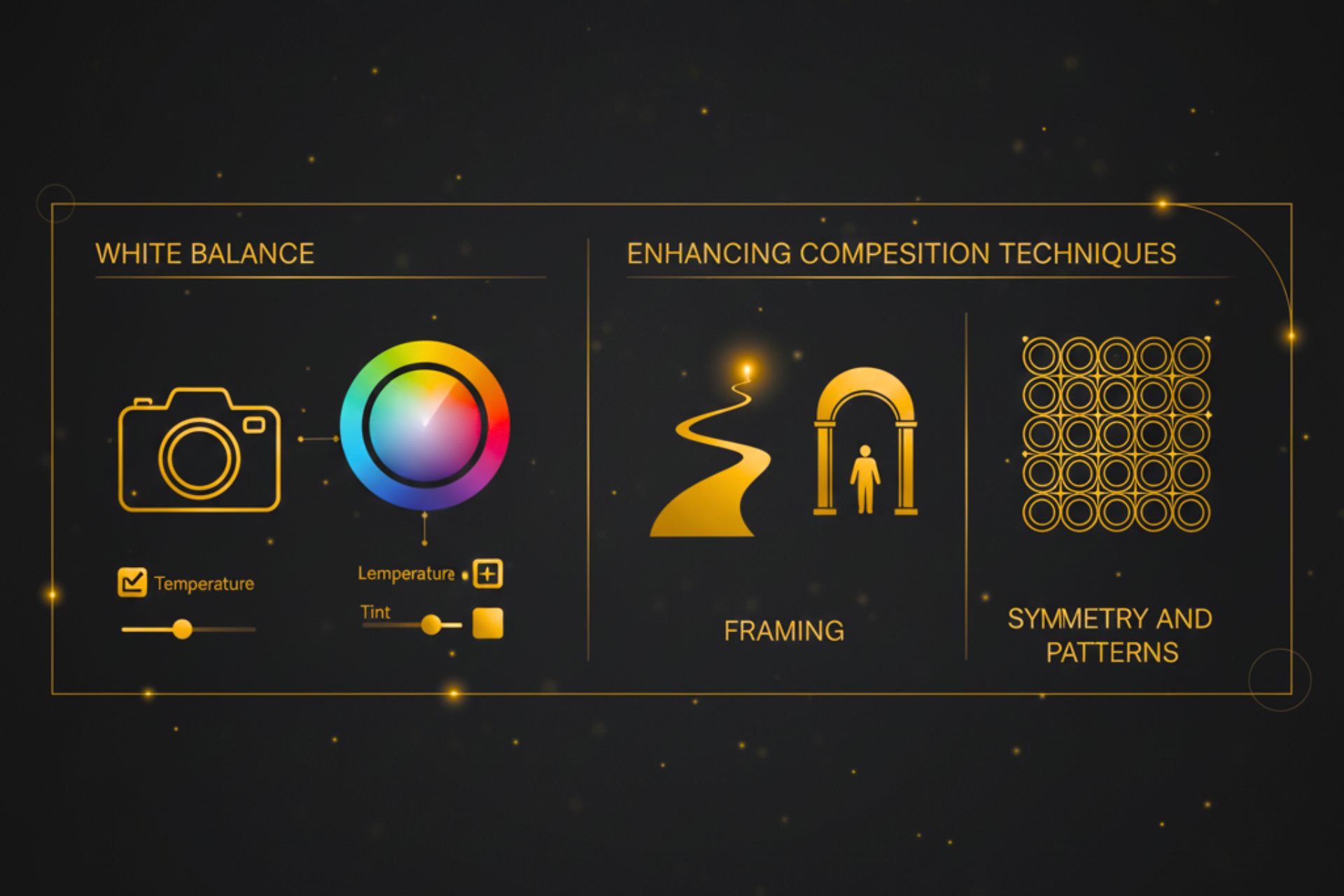
White Balance
Correcting white balance ensures that colors in your photos appear natural, regardless of the lighting. It’s especially critical in low-light or artificial light settings to avoid color distortions.
Enhancing Composition Techniques
Composition refers to how you arrange elements within the frame, significantly affecting how a viewer interprets the image. Master these composition techniques to elevate your photography:
Leading Lines: Use natural lines to direct the viewer’s attention to the subject.
Framing: Surround your subject with elements like arches or windows to draw focus.
Symmetry and Patterns: Use repeating shapes and patterns to create balance and visual appeal.
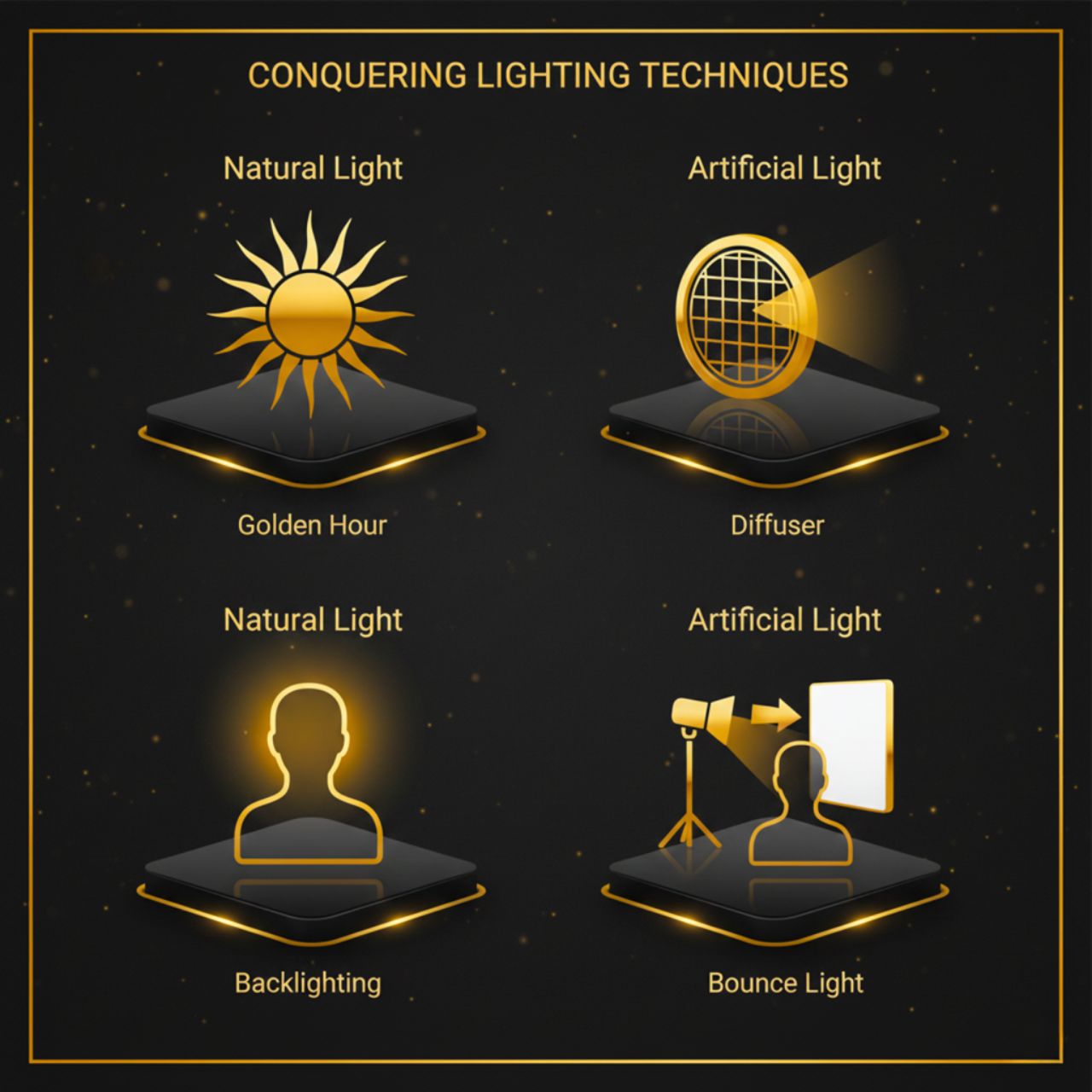
Conquering Lighting
Lighting is one of the most pivotal aspects of photography, influencing mood, texture, and overall image quality.
- Natural Light
- Golden Hour: The best time for soft, warm light is just after sunrise and before sunset.
- Backlighting: Position the light behind the subject for striking silhouette images.
- Artificial Light
- Use diffusers or bounce light off white surfaces to soften shadows and achieve more flattering lighting.

Post-Processing Fundamentals
Post-processing is where you can refine and perfect your images. Use tools like Adobe Lightroom or Photoshop to adjust and enhance your photos:
Adjusting Exposure: Fine-tune brightness, shadows, and highlights.
Color Grading: Modify saturation or tint to adjust the mood of your photo.
Cropping and Alignment: Crop distractions and straighten horizons for a polished finish.
Conclusion
Fulfilling photography requires practice, patience, and a thorough understanding of photography insights and methods. Mastering your camera settings, composition, lighting, and post-processing techniques will significantly improve your photos. Over time, these foundational techniques will help you develop a unique style and elevate your photography skills to a professional level.